


Qashqai
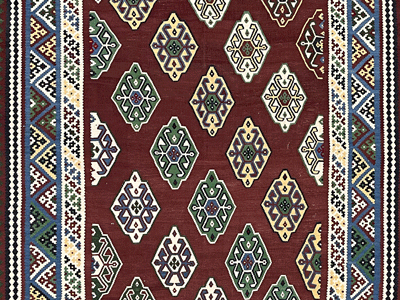
What Is Qashqai: All-Wool Craftsmanship from Iran’s Most Diverse Tribal Confederation
People
The Qashqai are a tribal confederation in Iran with ethnically diverse roots—including Turkic, Lor, Kurdish, and Arab elements. However, the majority identify as Turkic, speaking Qashqai Turkish and dialects similar to Chaharmahali Turkish. Their traditional migration routes stretch from the central Iranian plateau in Isfahan Province down to the southern coastlines of the Persian Gulf. Many Qashqai families trace their ancestral origins back to Ardabil in the northwest.
Handmade Pieces
Qashqai weavers are renowned for producing some of the softest and most finely woven tribal textiles in Iran. Their rugs are admired for their balance of durability and suppleness, while their kilims, jajims, salt bags (namakdan), and saddle bags (khorjin) are deeply integrated into nomadic life.
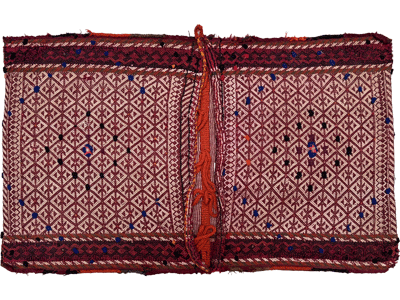
A Nomadic Qashqai Saddlebag, Circa 1900
Qashqai Rugs And Kilims
Famous Qashqai rug motifs include Hezar Gol (a stylized millefleur pattern), Kale Asbi (horse-head), Mahi (fish), Moharramat (striped field), and the unique and highly abstract Vizzi. Most Qashqai kilims use bold geometric abstraction, reflecting spontaneity and cultural symbolism over strict symmetry.
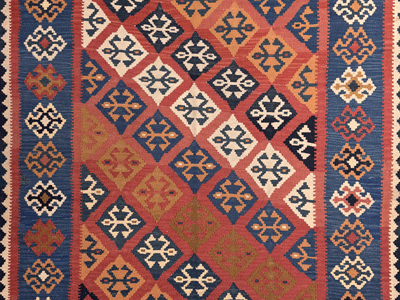
Detail of a vintage Qashqai kilim, Circa 1975
The finest rugs are often associated with specific subregions or weaving styles, such as Bolurdi, Yalameh, and Abadeh. The Derreh Shuri subgroup is especially well known for its high-quality flatweaves, contributing richly to the kilim tradition.
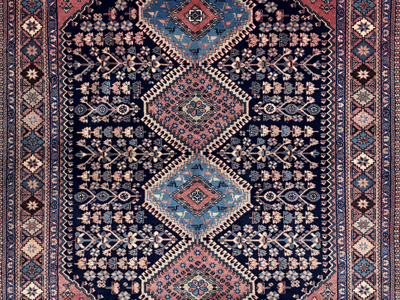
Detail of a All wool Yalameh Rug, Circa 1945, Navy Blue
Most authentic Qashqai weavings are made from handspun wool throughout, including both the pile and the warp/weft foundation—giving them a warm, tactile integrity and a high degree of collectibility. These rugs, kilims, and containers aren’t just decorative objects—they’re cultural tools, infused with nomadic identity, technical intelligence, and deep artistic freedom.