

How to Buy a Persian Rug: Expert Guide
How to Buy a Persian Rug – An Expert Guide to Authenticity, Quality, and Long-Term Value
Introduction
Buying a Persian rug is not simply purchasing a decorative object. It is acquiring a cultural artifact shaped by geography, craftsmanship, and centuries of weaving tradition.
In today’s global market, Persian rugs are widely admired — but they are also frequently misunderstood, misrepresented, and sometimes mislabeled. For interior designers and serious home buyers, understanding what truly defines authenticity and value is essential before making a decision.
This guide explains what makes a rug genuinely Persian, how to evaluate quality, and what truly determines long-term value — beyond marketing claims.
What Defines a True Persian Rug?
A Persian rug is defined first and foremost by cultural and geographical identity.
A true Persian rug is:
•Woven in Iran
•By Iranian weavers
•Within the cultural weaving traditions of the region
Design may be classical, tribal, or modern. A contemporary Persian rug with a minimalist layout can still be authentically Persian if woven within Iran’s weaving tradition.
Persian carpet is not merely a visual style — it is a structural and cultural identity.
The Three Things Every Buyer Should Check First
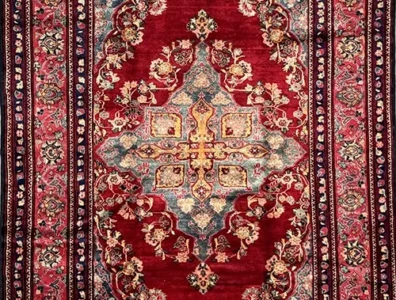
A very high quality and antique Lilian rug from Sultanabad, Center Iran
If you have only a few minutes to evaluate a rug, focus on these three essentials:
1. Condition
Is the rug structurally complete?
Are the borders intact?
Has anything been removed or shortened?
Even subtle border removal can reduce value dramatically — sometimes up to 80–90% depending on the piece.
2. Confirm Origin and Materials
Ask directly:
•Where was it woven?
•What materials were used?
•Is documentation available?
3. Ask About Age
Age alone does not create value — but it affects context, rarity, and market positioning.
What Truly Determines the Value of a Persian Rug?
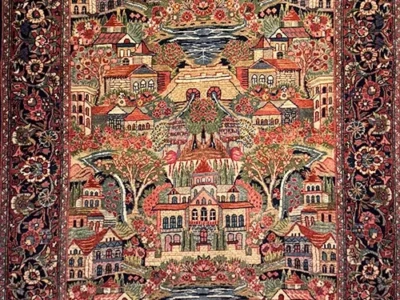
Detail of an antique Hamedan rug with landscape design with rivers
No single factor determines value. Persian rugs function much like works of art — multiple elements overlap.
The general order of importance is:
1.Condition
2.Authentic origin
3.Quality of materials
4.Design and artistic integrity
5.Age
6.Knot density (in context)
A rug may be old but damaged — and therefore not valuable.
Another may be moderate in age but artistically exceptional and highly collectible.
Material Quality: What “Living Wool” Means
Material is often more important than knot density.
In Persian weaving terminology, there is a concept sometimes described as “living wool.” This refers to wool sheared in spring from live animals, rich in lanolin, elastic, and vibrant. It feels resilient and almost alive in the hand.
This differs from lower-quality wool removed from animal hides after slaughter (skin wool), which lacks elasticity and durability.
High-quality wool should feel:
•Elastic
•Slightly oily (natural lanolin presence)
•Soft but resilient
•Vibrant in color absorption
The foundation (warp and weft) should ideally be cotton, wool, or silk — not polyester.
Knot Density: Quality Indicator or Market Myth?
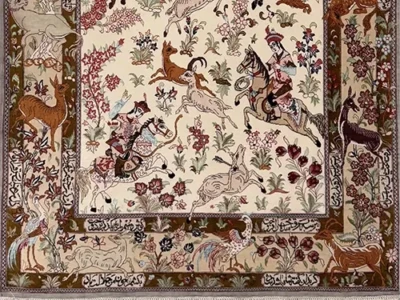
A fine vintage full silk Qom rug with 60 KPSI and hunting design
High knot density (KPSI) is often marketed as the ultimate indicator of quality. In reality, this is an oversimplification.
•Many museum-quality rugs have medium knot counts.
•Tribal rugs often have lower knot density but extraordinary artistic value.
•High knot count increases labor time, but does not automatically guarantee better wool, better dye, or better design.
Knot density became heavily emphasized during Western luxury framing of carpets in the 20th century. It is a market metric — not a scientific measure of artistic quality.
Structure, material, and artistic coherence matter more.
Natural Dyes vs Synthetic Dyes: What Buyers Should Understand
Natural dyes are often associated with higher quality and better health characteristics. However:
•True vegetable dye identification requires expertise.
•Not all rugs marketed as “100% vegetable dye” genuinely are.
•Dye stability depends more on dyeing technique than dye category.
Some modern rugs are chemically softened to simulate age. Certain washing or bleaching processes can artificially mute colors. While this may create a fashionable appearance, aggressive chemical treatment can weaken wool fibers over time.
Natural aging, on the other hand, often enhances antique rugs — especially when fading occurs gradually and organically.
Authenticity and Mislabeling in the Global Market
Mislabeling is one of the most common issues in the rug trade.
•Some rugs woven in Afghanistan or Pakistan are sold as Persian.
•Production may be outsourced due to labor costs.
•Not all Afghan rugs are low quality — the issue is misrepresentation.
Buyers should always request:
•Full documentation
•Clear origin disclosure
•Accurate age representation
Even inside origin countries, new rugs may be presented with misleading regional attributions.
Antique and Vintage Rugs: What Makes Them Collectible?
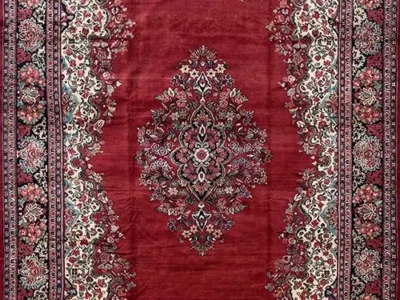
An oversize antique Sultanabad rug, Highly collectable and super rare to find
Not every old rug is valuable. Collectibility depends on:
•Condition
•Rarity
•Artistic uniqueness
•Provenance
•Scale (large dimensions are often preferred by museums)
Tribal rugs with asymmetrical, spontaneous designs can be highly collectible despite lower knot density.
Pictorial rugs are rarer because they were produced in smaller numbers. Healthy antique pieces with intact structure tend to hold value best.
Persian Rugs as an Investment
Persian rugs should not be viewed as guaranteed financial instruments.
•Not all rugs appreciate in value.
•Many preserve value over time.
•Unique, well-documented, non-mass-produced pieces have stronger potential.
Buying closer to origin markets can affect pricing structures, but long-term performance varies by piece.
Rugs behave more like artworks than commodities.
Choosing a Persian Rug for Interior Design
Interior designers typically prioritize:
•Scale and proportion
•Color harmony
•Compositional balance
Vintage rugs often integrate beautifully into contemporary interiors because they add texture and narrative depth.
Modern Persian designs also exist and can complement minimalist architecture.
Taste is personal — it cannot be categorized strictly by geography.
Common Market Misconceptions
•“100% natural dye” is often overused in marketing.
•High knot density obsession can distract from material quality.
•Artificial aging is not the same as natural aging.
•Age alone does not equal value.
Frequently Asked Questions
Are Persian rugs worth the money?
When authentic and in good condition, Persian rugs often preserve value and offer long-term durability and artistic presence.
Is high knot density always better?
No. Structure, material quality, and artistic integrity are more important.
How can I tell if a rug is truly Persian?
Ask for origin documentation, inspect the backside weaving structure, and confirm materials.
Do Persian rugs increase in value?
Some do, especially rare antique and well-preserved pieces. Many maintain value rather than dramatically appreciate.
Are tribal rugs collectible?
Yes. Many tribal rugs are highly collectible due to rarity and artistic spontaneity.
Final Perspective
Buying a Persian rug requires informed evaluation. The most important factors are authenticity, condition, material quality, and artistic integrity.
In a market filled with marketing language and simplified metrics, knowledge remains the most valuable tool a buyer can have.
<script type=”application/ld+json”>
{
“@context”: “https://schema.org”,
“@type”: “FAQPage”,
“mainEntity”: [{
“@type”: “Question”,
“name”: “Are Persian rugs worth the money?”,
“acceptedAnswer”: {
“@type”: “Answer”,
“text”: “Authentic Persian rugs in good condition often preserve value over time and offer long-term durability and artistic significance.”
}
},{
“@type”: “Question”,
“name”: “Is high knot density always better?”,
“acceptedAnswer”: {
“@type”: “Answer”,
“text”: “No. Knot density alone does not determine quality. Material quality, structure, and artistic integrity are more important.”
}
},{
“@type”: “Question”,
“name”: “How can I tell if a rug is truly Persian?”,
“acceptedAnswer”: {
“@type”: “Answer”,
“text”: “Ask for origin documentation, inspect the backside weaving structure, and confirm the materials used in the rug.”
}
},{
“@type”: “Question”,
“name”: “Do Persian rugs increase in value?”,
“acceptedAnswer”: {
“@type”: “Answer”,
“text”: “Some rare antique Persian rugs may appreciate, but many primarily preserve their value rather than dramatically increase.”
}
}]
}
</script>
{
“@context”: “https://schema.org”,
“@type”: “FAQPage”,
“mainEntity”: [{
“@type”: “Question”,
“name”: “Are Persian rugs worth the money?”,
“acceptedAnswer”: {
“@type”: “Answer”,
“text”: “Authentic Persian rugs in good condition often preserve value over time and offer long-term durability and artistic significance.”
}
},{
“@type”: “Question”,
“name”: “Is high knot density always better?”,
“acceptedAnswer”: {
“@type”: “Answer”,
“text”: “No. Knot density alone does not determine quality. Material quality, structure, and artistic integrity are more important.”
}
},{
“@type”: “Question”,
“name”: “How can I tell if a rug is truly Persian?”,
“acceptedAnswer”: {
“@type”: “Answer”,
“text”: “Ask for origin documentation, inspect the backside weaving structure, and confirm the materials used in the rug.”
}
},{
“@type”: “Question”,
“name”: “Do Persian rugs increase in value?”,
“acceptedAnswer”: {
“@type”: “Answer”,
“text”: “Some rare antique Persian rugs may appreciate, but many primarily preserve their value rather than dramatically increase.”
}
}]
}
</script>