

home » Shop » Baluch Persian Rug Pictorial Pahlavi Family Dated 1968

Baluch Persian Rug Pictorial Pahlavi Family Dated 1968

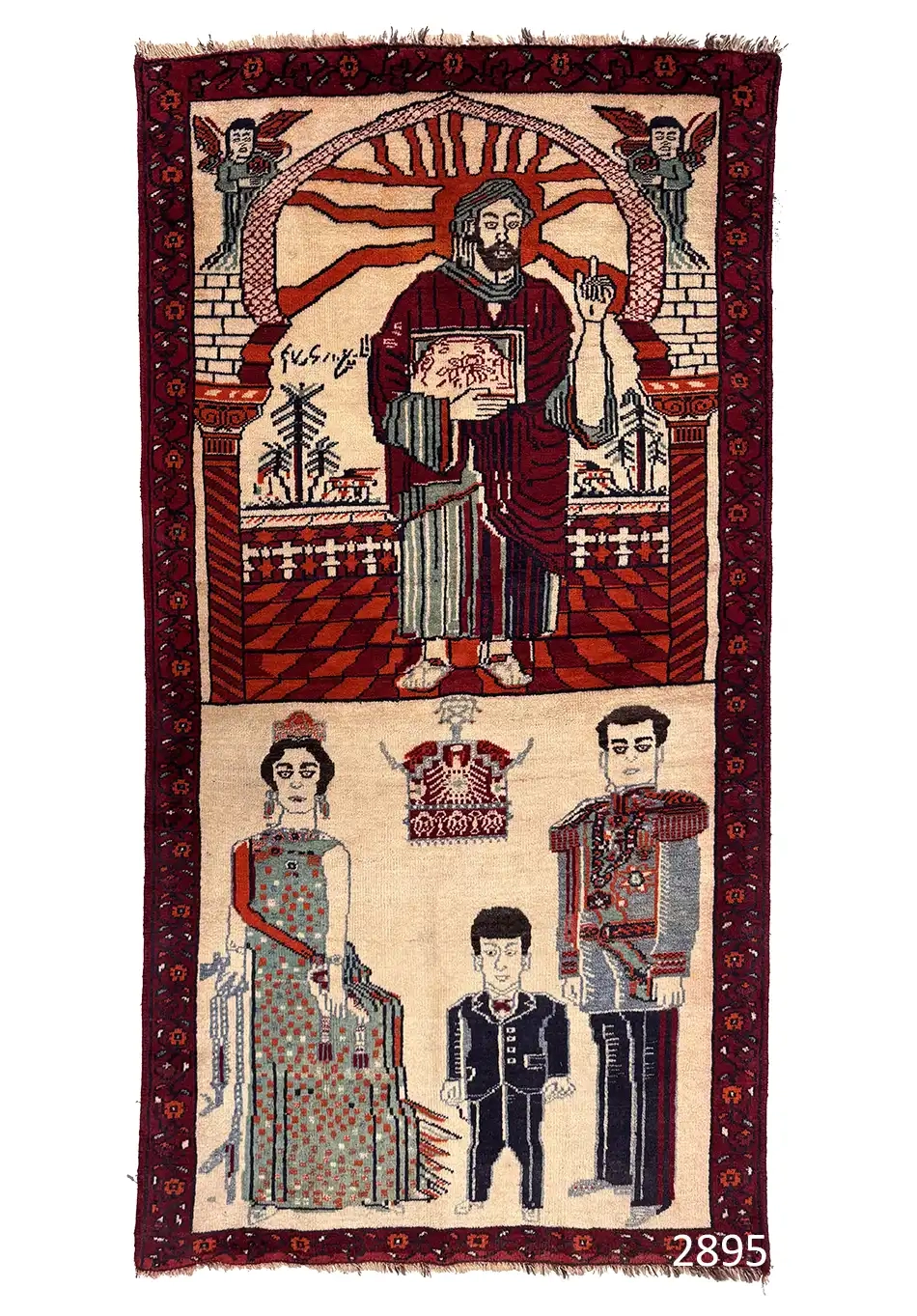
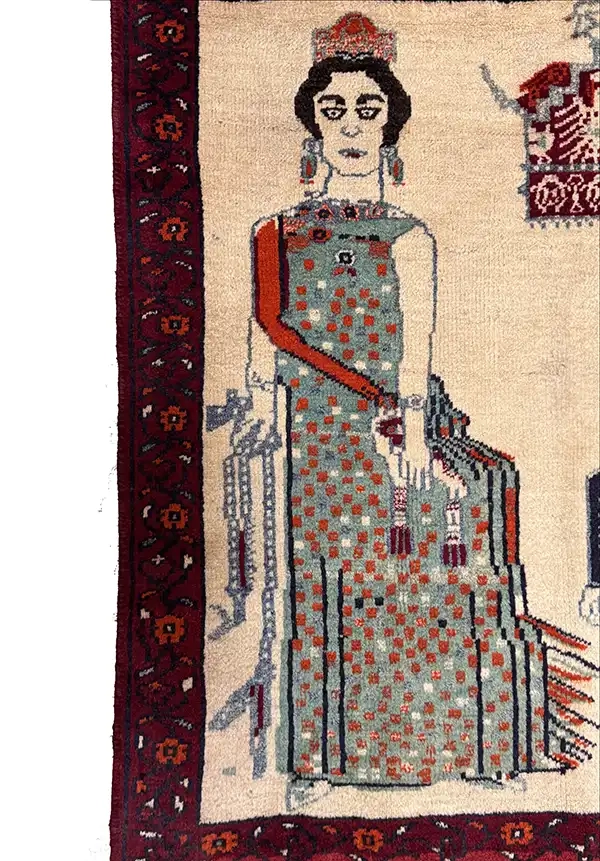
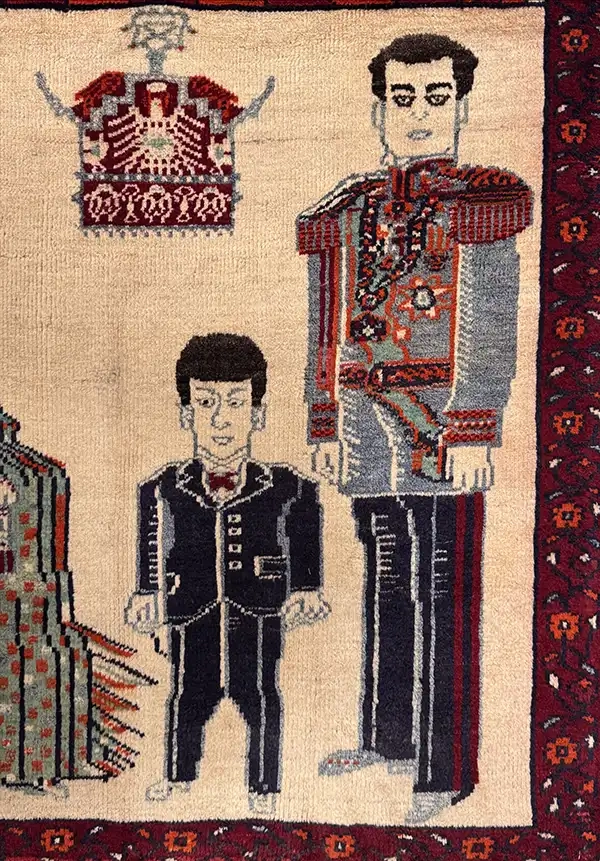
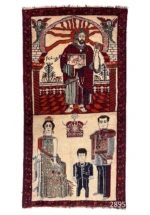
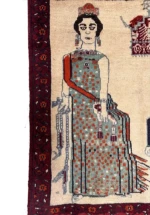
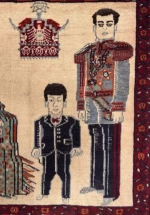
This Baluch Persian rug is a semi-antique pictorial piece dated 1347 (1968), depicting the Pahlavi II family in the lower section, including Mohammad Reza Pahlavi, Queen Farah, and Crown Prince Reza Pahlavi, alongside a royal crown. The composition likely reflects a mind-woven interpretation of the coronation period, produced shortly after the official ceremony.
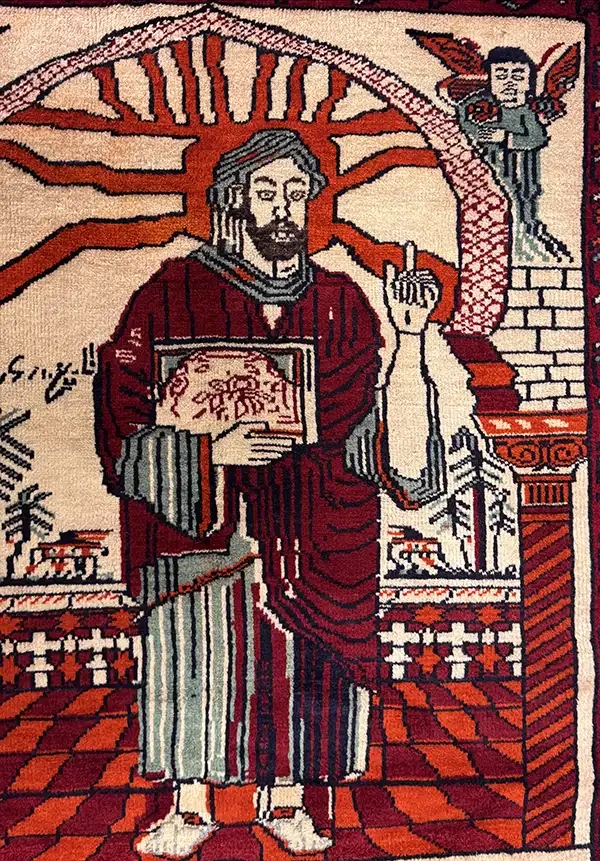
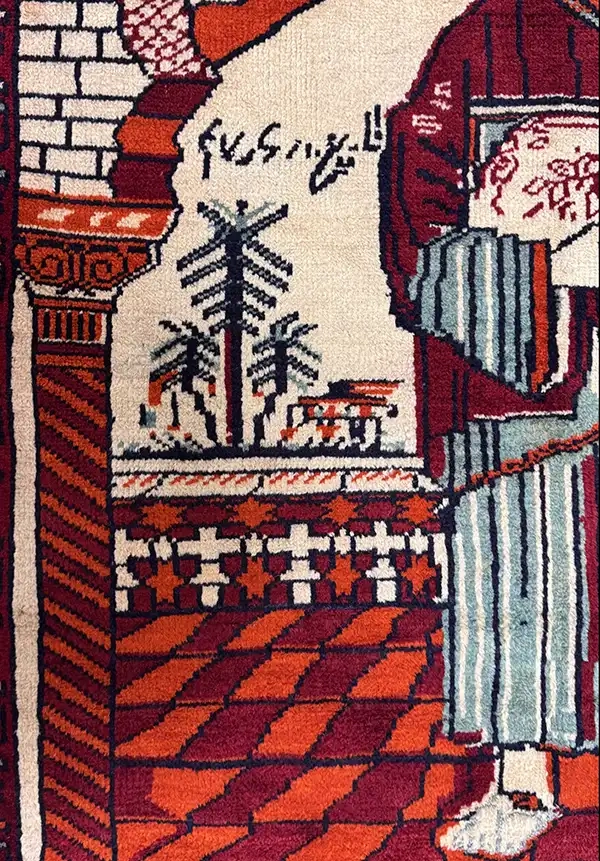
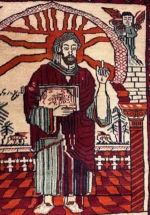
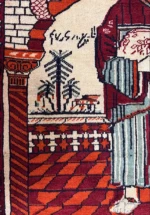
In the upper half, a sacred figure is depicted combining Islamic and Christian iconographic elements: holding a book, raising one hand in a gesture of blessing, and flanked by two angels. The garments, headscarf, and the presence of a date palm reference Islamic visual traditions, while the structure of the figure follows Christian imagery.
The rug is entirely mind-woven without a pre-drawn design, resulting in a highly individual and layered composition. It is considered extremely rare among Iranian pictorial rugs. The pile is medium.

Weight 3 kg
Dimensions 171 × 88 cm
Origin

Types

Circa

Sqm

Dimensions

88*171 cm

Weight

3 kg

Material

Color

,

,

Weaving

Hand-knotted

Pattern

,

USD

OMR

SKU: 2895 Category:
SHIPPING & DELIVERY

Shipping Costs:

Shipping costs depend on the weight of the carpet and the destination.

Shipping Methods:

  • For orders under 20–25 kg (depending on the destination), we offer door-to-door delivery.
  • For heavier orders, shipping will be via air freight. Customers will need to arrange to collect their carpets from the airport. While taxes are likely, we can assist in keeping these costs low. There is no weight limit for air freight shipping.

Delivery Time:

Your order will typically arrive within 1–3 weeks.

Taxes and Duties:

  1.  You will not be charged any taxes for shipping from Iran.
  2. Customs duties in your country may apply depending on local

import policies. However, in most cases, carpets from Iran are considered gifts and are not taxed. If you have specific concerns about your address, feel free to contact us for a quote.

Tracking Your Order:

After shipping, we will provide you with a tracking number to follow your carpet’s journey. We also monitor shipments daily to ensure smooth delivery.

Returns and Exchanges:

As shipping is one-way and costs are significant, we do not offer returns or exchanges. To ensure your satisfaction, we send detailed videos and photos of the carpets before shipping.

Insurance for Lost Carpets:

All carpets are insured against loss during shipping. In the rare event of a lost carpet, we will refund the full purchase amount and shipping cost. Over the past 10 years, this has never happened.

Shipping Delays:

While we aim to deliver within the stated timeframe, delays can occasionally occur due to unforeseen circumstances. We will stay in touch and work with the shipping provider to resolve any issues promptly.

Reviews (0)

Reviews

There are no reviews yet.

Be the first to review “Baluch Persian Rug Pictorial Pahlavi Family Dated 1968”

Your email address will not be published. Required fields are marked *

Description

This Baluch Persian rug is a pictorial composition dated 1347 in the Solar calendar (1968 A.D). The timing of the weaving suggests that it was produced shortly after the coronation of the Crown Prince, and the imagery likely represents a mind-woven interpretation of this historical moment.
The lower section of the rug features portraits of the Pahlavi II family, including Mohammad Reza Pahlavi, Queen Farah, and Crown Prince Reza Pahlavi. A royal crown is also included, reinforcing the theme of monarchy and ceremony.
The upper section presents a sacred figure that merges multiple visual traditions. The figure holds a book and raises one hand in a gesture of blessing, while two angels appear on either side, reflecting elements of Christian iconography. At the same time, the clothing, headscarf, and the depiction of a date palm in the background relate closely to Islamic visual language.
This combination of imagery suggests that the weaver drew from multiple sources, possibly indirect or remembered, rather than from a single formal model. The rug is woven without a pre-drawn design, and the composition evolves through the weaving process itself.
Among Iranian pictorial carpets, this example is considered exceptionally rare due to its subject matter, historical reference, and the complexity of its iconography.